Rose invites the Nappos to camp, and George backs her
The Power of the Dog (Thomas Savage Edition)Rose Gordon Burbank’s invitation to Edward Nappo and his son gives a family attempting to return to ancestral ground a temporary welcome at the Burbank Ranch. George Burbank backs her decision when Phil Burbank demands that they leave. The encounter links an intimate gesture of hospitality to the larger history of Indigenous dispossession, while exposing a disagreement within the ranch household over who may decide how its land is used.
Background: Dispossession and return
The Nappos’ journey takes place after the valley’s Indigenous people have been driven from their lands and sent to a reservation. The account connects that removal to a government that no longer treats treaties as meaningful safeguards: land has become too valuable for negotiated arrangements, while white voters, rather than the threat of Indigenous resistance, are presented as the power the government fears. Johnny Gordon had seen people leaving in worn buggies and on old ponies from his Model-T motorcar. His thoughts followed them to the arid flats of southern Idaho, where harsh winters, sparse trees, poor soil, and sulfurous well water shaped life on the reservation.
The restrictions there extend beyond loss of land. Alcohol is prohibited, and leaving the reservation requires a permit, granted only for a pressing reason. Because the displaced people have nowhere to go and few people willing to shelter them, the need to travel seldom receives attention. Against this system of constrained movement, Edward Nappo and his son’s return toward the valley is more than an ordinary visit. Rose’s invitation offers them a place to stop, although the evidence does not establish that it can undo or alter the conditions imposed on them.
Rose meets Edward Nappo and his son
Rose notices the family’s cart again during a storm. George tells her that Phil went out earlier to check on a rider, and Rose expects that he may have turned the travelers back. Looking through binoculars, George recognizes the older man as the son of a chief. Rose supposes that the family may be trying to see a grave and wonders what the boy must be feeling. Her interpretation is presented as her supposition, not as a confirmed account of their purpose.
Rose leaves the house to reach them. Her shoes are unsuitable for walking, and she stumbles in her high heels as she hurries after the cart. She asks the travelers to stop, catches up breathless, and leans against the cart while she speaks with the older man. She tells him that she saw them earlier and that she would have come out to see them had she known his identity. The scene makes recognition the immediate hinge of her action: once she understands who is traveling with the boy, she approaches rather than leaving the family to pass unacknowledged.
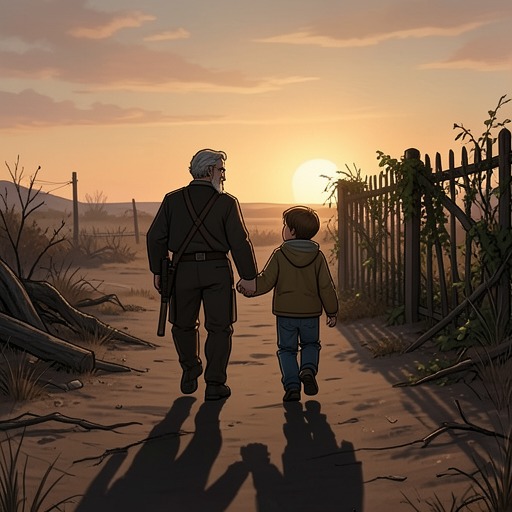
Rose invites Edward Nappo and his son to camp with the household, explaining that she and her husband would be proud to host them. Edward accepts on behalf of himself and his son. The boy looks at his father with pride and adjusts his cap as the horse turns the cart around. The exchange ends with a practical change in their route: instead of continuing away, they return toward the ranch with permission to camp there.
George’s support and Phil’s objection
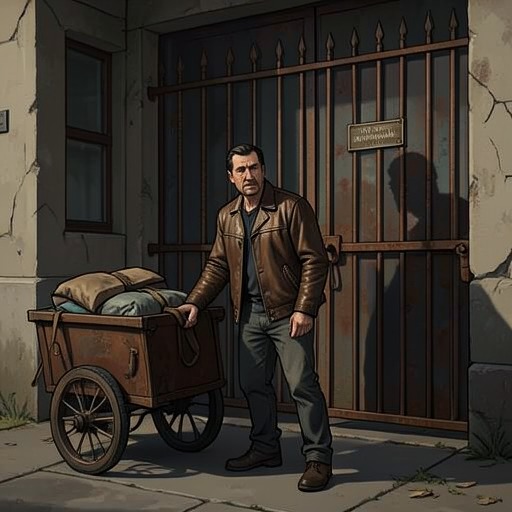
Phil’s earlier response to the travelers had been an order to get back into their vehicle and leave with the boy. Later, when he finds that they are camping behind the house, he reacts angrily and asks what they are doing there. George answers that he has allowed them to stay for a few days. His intervention is quiet but explicit: Rose’s welcome has become a decision he is prepared to uphold, not merely a personal offer that Phil can cancel without challenge.
Phil invokes Rose’s words as a reason the family should pack up, treating her invitation as something he can reverse. George keeps the focus on the people affected, especially the boy, and tells Phil that the travelers will stay. Phil presses on a sensitive point in the disagreement, but George maintains his decision and leaves the barn. The conflict is therefore not resolved by persuasion or agreement. It is settled, for the moment, by George’s refusal to yield authority over the invitation.
Significance of the encounter
The hospitality is limited in duration: George offers a few days of camping, not a permanent home or a remedy for the family’s dispossession. That limit matters. The Nappos remain travelers whose access to land and shelter is shaped by forces far larger than the brief welcome they receive. Yet the invitation counters the habitual exclusion that makes their movement precarious, and the boy’s proud response registers the personal meaning the welcome may hold without requiring the narrative to claim more than it shows.
The scene also distinguishes the household’s responses. Rose acts from sympathy for the boy and a desire to recognize his family; George backs her openly when Phil challenges the decision. Phil, by contrast, tries first to drive the travelers away and then to revoke their welcome. His objection turns a compassionate gesture into a domestic contest over control of the ranch. The Nappos’ brief stay thus reveals both the reach of dispossession beyond the reservation and the unequal, contested nature of the shelter available to them.